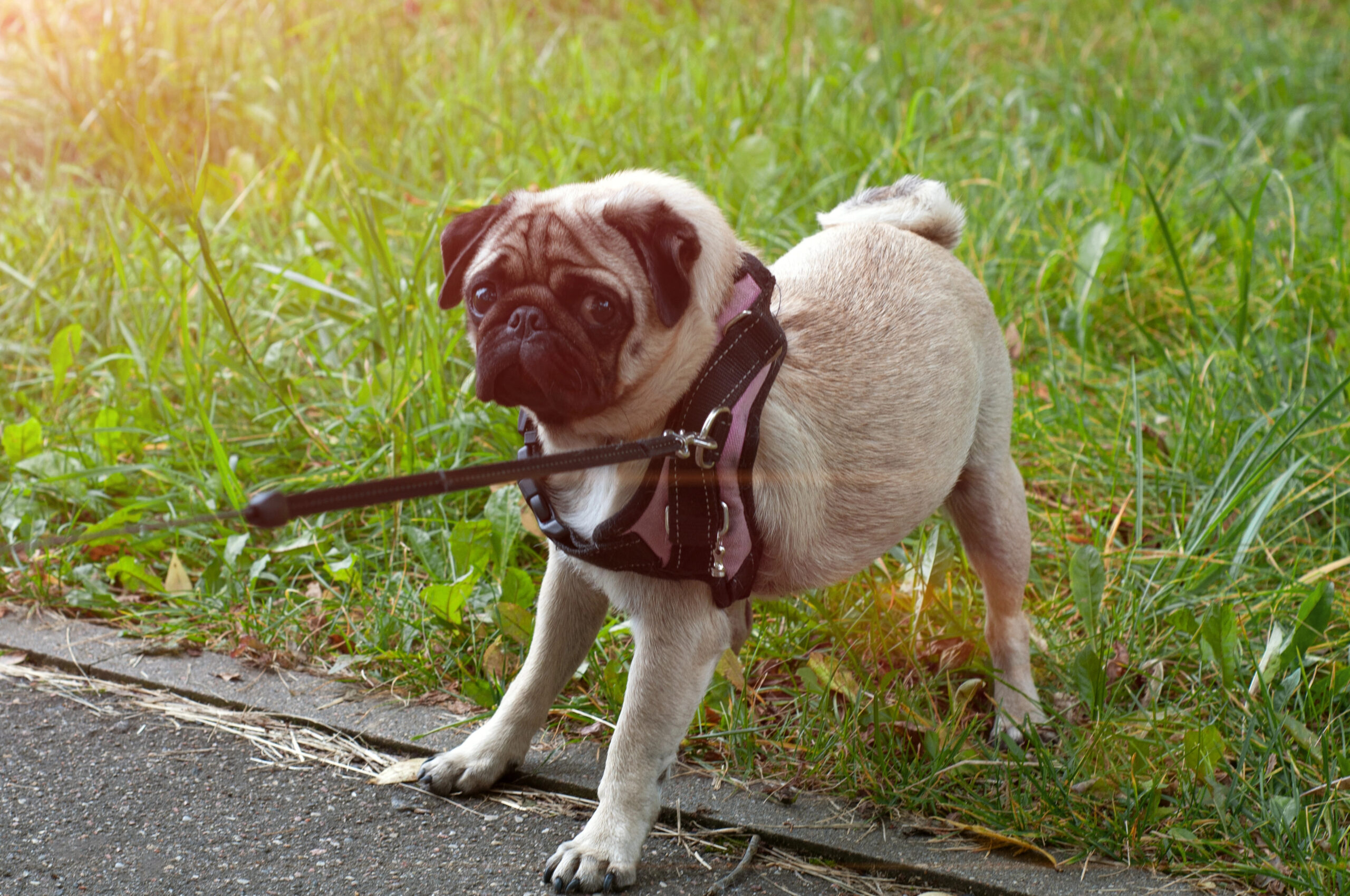
You pick up the lead, but your dog doesn’t want to go. They might run and hide or sit down and refuse to go out the front door. Maybe they freeze halfway down the street. Or perhaps they don’t even want to go out into the garden. It’s easy to read this as your dog being difficult or stubborn — but a dog who refuses to walk is almost always trying to tell you something.
At Alongside Animals, I see all behaviour as communication. Once you understand what your dog is saying, you can try to help.
Your dog isn’t being stubborn, bossy or dominant
“He’s just being stubborn and lazy.” “She wants to be the boss.” “He’s trying to be dominant.” These are explanations I frequently hear from owners whose dogs won’t walk somewhere — but dogs don’t think that way.
Stubbornness implies a dog who could happily walk but is choosing not to, out of sheer will. But that couldn’t be further from the truth. When a dog refuses, hesitates, or freezes, they’re responding to how they feel in that moment — physically or emotionally. Labelling it ‘stubborn’ stops us from looking for the real cause, and it can lead to pulling, scolding, or dragging, all of which tend to make the behaviour worse.
And your dog isn’t trying to be the boss or control you. The idea that dogs are constantly angling for status over us is an old one that science has long moved past — but that’s a whole topic in itself. For now, what matters is this: a dog who stops, hesitates or refuses isn’t staging a power struggle. They’re telling you something feels wrong.
So if it isn’t stubbornness or dominance, what is it? In my experience, it nearly always comes down to one of three things.
Reason 1: Pain or physical discomfort
This is the one to rule out first, every time — but it’s also the one that’s easily missed, and that matters.
Some causes are easy to spot and easy to rule out: a cut pad, a torn nail, a corn. The harder cases are the ones where there’s no limp at all, as dogs are remarkably good at coping and masking discomfort. A great deal of pain, particularly low-grade or chronic musculoskeletal pain, simply doesn’t show up as obvious lameness. Joint conditions like arthritis and hip dysplasia, soft-tissue strain, or spinal discomfort can all leave a dog reluctant to walk while, to the casual eye, looking perfectly sound.
And don’t assume youth rules it out: dogs can be born with a whole host of joint and spinal problems — luxating patellas, hip or elbow dysplasia, to name a few — that cause pain from an early age. A young dog can hurt just as much as an old one.
A check-up with your regular vet is essential and should always be your first step. But it’s worth being aware of the limits of a single consultation: in a short appointment in an unfamiliar room, a dog is usually alert and running on adrenaline, which can easily mask any discomfort.
And it isn’t always joints. Sometimes I have to really play detective and rule out gut, skin or head pain too, which can quietly take the enjoyment out of a walk.
A deeper, behaviourist-led investigation often reveals subtler signs of pain and gives you and your vet something concrete to explore further. Getting to the root of subtle pain is often the turning point in resolving your dog’s reluctance to go on walks.
Reason 2: Fear or anxiety
If your dog is physically well, the next thing to consider is how they feel about going out. Fear and anxiety are common reasons dogs refuse to walk
I see this frequently in rescue dogs from abroad, whose often traumatic journeys have ended with them arriving in an alien environment. Under-socialised puppies and dogs who’ve had a frightening experience outdoors can also struggle with walks, especially in busy urban environments.
The trigger might be obvious — a passing lorry, a barking dog, fireworks — or surprisingly specific, like a wheelie bin, a drain cover, or a single spot on the street where something once startled them. For some dogs, the outside world is overwhelming, and a noise phobia can be the reason a walk feels frightening rather than fun.
A frightened dog will often freeze, lower their body, tuck their tail, or try to turn back towards home. If your dog shows any of these signs, it’s critical not to keep forcing them out on walks. Not only does it risk worsening their fear, but it also risks damaging your dog’s trust in you. They’re not refusing to walk for the sake of it; they’re asking for space and safety.
Reason 3: A learned negative association
Dogs are constantly learning from their experiences, and sometimes walks themselves become linked to something unpleasant.
If the lead and harness only ever appear before an unpleasant experience — being forced to go somewhere a dog finds scary, memories of feeling discomfort or pain, or being told off— a dog can start to dread the whole ritual before you’ve even left the house. (Knowing how dogs learn is the key to understanding how this can happen — it’s a topic worth exploring further.)
Negative associations can build gradually, which is why a dog who used to love walks may slowly become reluctant. The good news is that new, more positive associations can also be learned. With patience and the right approach, we can help walks become something your dog looks forward to again.
Why this matters to vets
Understanding how animals learn is essential in veterinary work because a single negative moment can create long-lasting associations. For example, if a dog experiences pain during a vaccination, they may associate that sensation with everything around them at the time — the vet, the table, the clinic’s smell, even the car park. These cues can then trigger anxiety on future visits.
Gentle handling, distraction with treats or toys, and a calm environment can help prevent negative associations from forming. Over time, pets learn that the clinic is a place where good things happen, which builds trust, reduces stress, and makes visits safer and smoother for everyone.
What to do if your dog won’t go on walks
A calm, step-by-step approach works far better than force:
- Book a vet check first. Always start by trying to rule out pain or illness before assuming a problem is ‘just’ behavioural. But remember that subtle pain is easily missed in a single appointment, so keep an open mind and watch for subtle changes in your dog’s body posture.
- Don’t coax, drag or scold. Pulling a frightened dog forward confirms that walks are something to be worried about and could worsen the problem.
- Watch for patterns. Does your dog stop in the same place, at certain sounds, or with particular equipment? The pattern may help point to the cause.
- Follow your dog’s lead. Short, pressure-free outings build confidence far faster than pushing through — which means going the way your dog wants to go and turning back when they ask to. If your dog is too scared to leave the house, it’s fine to pause walks entirely and let them toilet in the garden while you rebuild their confidence. Meeting them where they are and prioritising their sense of safety come first (more on that next time).
- Get qualified support. If pain, fear or a learned association is driving the behaviour, a qualified veterinary behaviourist can help you get to the bottom of the problem and build a tailored, force-free plan.
When to get professional help
If your dog is reluctant to walk, working with a qualified veterinary behaviourist can make the difference in two ways: spotting the subtle, easily missed pain that drives so many cases, and — once a medical cause is ruled out or treated — addressing the underlying fear or learned associations.
Having me involved can make a real difference. I take the time to observe your dog — not just in a single snapshot, but during an extended consultation and any follow-ups. I’ll watch how they move, hesitate, and shift their weight, and I’ll often ask for videos of your dog walking, playing, and even going to the toilet, because posture during everyday activities can reveal discomfort or signs of how your dog is feeling that you might not have noticed.
At Alongside Animals, I help you understand what your dog is communicating and put together a kind, evidence-based plan to get them enjoying walks again — at a pace that feels safe for them.
Do you need help with your dog’s reluctance to walk — or any other behaviour that’s worrying you? I offer behavioural consultations for dogs and cats, in person and remotely, across the UK. If you’d like me to help, please get in touch here.