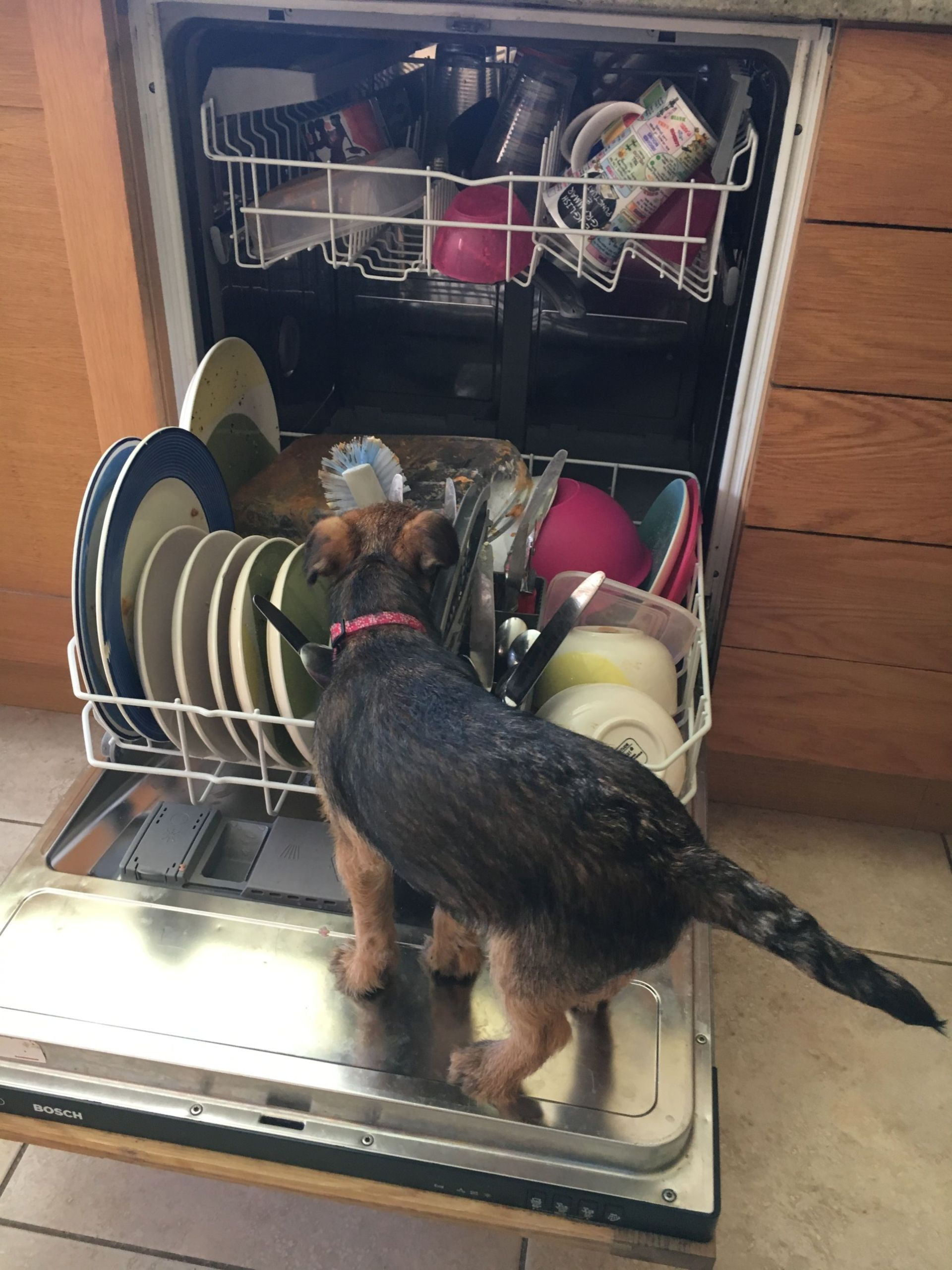
Have you ever wondered how your pet learns — not just during training, but in everyday life? As a veterinary behaviourist, I recognise that learning is happening continually. When a dozing dog hears the fridge door and races to the kitchen, or when a cat starts hiding at the sight of the vacuum cleaner, they’re showing how powerful learning really is.
In this blog, we’ll explore how animals learn through experience, how we sometimes teach without meaning to, and why understanding these processes can help us support our pets.
What is animal learning, and why does it matter?
When we talk about “learning” in animals, we’re really talking about how they adapt and survive in their world.
Every day, pets notice the things happening around them — the stimuli in their world. These might be sounds, sights, smells, people, other animals, or even things that cause pain. Their senses detect them, and their brains decide how to respond to that information. Learning helps them stay safe and understand what leads to positive outcomes and positive feelings (and what doesn’t).
It starts before they’re even born and continues throughout their whole lives.
Pets learn in a few different ways:
- through repeated exposure to the same stimulus,
- by forming associations between stimuli and events,
- and by observing others.
All of these shape how they behave.
Non-associative learning — getting used to things (or not)
This type of learning is all about repeated exposure to the same thing.
There are two main patterns:
Habituation — “I’ve noticed this before, it’s fine, I’ll ignore it.”
A harmless stimulus becomes less interesting over time. Think of a dog who pricks up their ears the first few times the washing machine spins, then eventually stops reacting — it turns into something they simply tune out.
Sensitisation — “This keeps happening, and it’s getting to me.”
The more the stimulus happens, the bigger the reaction. A cat might barely notice the kettle clicking off at first, but hearing it repeatedly can start to bother or unsettle them.
Animals can habituate or become sensitised to stimuli at any age, and it is especially important to consider this when choosing a new puppy or kitten.
A youngster raised in a busy, family household tends to take everyday life in stride. Their early experiences — along with their individual temperament and even their mother’s stress levels during pregnancy — help shape how confidently they handle new situations.
A puppy or kitten raised in a barn or puppy farm may not have had this exposure. For them, vacuum cleaners, televisions, or children playing can feel overwhelming. Instead of getting used to these things, they may become more sensitive to them over time.
Associative learning — “when X happens, Y follows”
This is where animals learn that one thing predicts another, or that their own behaviour leads to certain outcomes. It includes classical conditioning and operant conditioning.
Classical conditioning — automatic emotional learning
This is the type of learning Pavlov described. Animals learn that one event predicts another. Classical conditioning is all about reflexes and emotions — the animal isn’t choosing to feel excited or anxious; the association creates that response.
A familiar example in training is teaching a marker word or clicker. You say “yes” or click, then immediately give a treat. After enough repetitions, the marker predicts the reward, and your pet feels a spark of positive anticipation.
You’ll see this outside of training too. If you pair a collar or harness with treats, your pet can learn that the collar predicts something good. What could have been stressful becomes a positive experience.
Operant conditioning — learning through consequences
This is voluntary learning. The animal tries a behaviour; something happens—the consequence —and they decide whether to do it again.
Consequences fall into two groups:
- Reinforcers — things that make a behaviour more likely (or rewards)
- Punishers — things that make a behaviour less likely
In force-free training, we focus on adding rewards that matter to the individual animal — food, toys, praise, sniffing, play — to encourage the behaviours we want.
Punishers include shouting, stern voices, or physical corrections such as choke chains, prong collars, or shock collars. These methods can create fear, pain, and confusion, and they damage the trust between a pet and their people. That’s why I never use them and don’t recommend them.
Learning is happening continuously – not just during training
Learning happens in everyday life and is shaped by emotions and results as much as by practice.
A loud bang, like fireworks outside, can trigger a reflex startle or fear response— the dog’s heart races, muscles tense, and they may try to hide. That emotional reaction becomes part of the learning process, teaching them that fireworks are something frightening.
On the other hand, the smell of roast chicken on the kitchen worktop causes excitement and anticipation. If the dog manages to jump up and grab some, the pleasure of eating it reinforces the behaviour. In other words, the reward makes jumping up more likely to happen again the next time they smell or see food on the counter.
What feels rewarding or punishing depends on how the individual animal experiences it in that moment. And it’s not always under our control — everyday sights, sounds, and stimuli can shape behaviour through the emotions they trigger.
Why this matters to vets
Understanding how animals learn is essential in veterinary work because a single negative moment can create long-lasting associations. For example, if a dog experiences pain during a vaccination, they may associate that sensation with everything around them at the time — the vet, the table, the clinic’s smell, even the car park. These cues can then trigger anxiety on future visits.
Gentle handling, distraction with treats or toys, and a calm environment can help prevent negative associations from forming. Over time, pets learn that the clinic is a place where good things happen, which builds trust, reduces stress, and makes visits safer and smoother for everyone.
Why this matters to pet guardians
Every interaction teaches your pet something, and punishment often teaches the wrong lesson. A sharp tug on the lead, for example, doesn’t just tell a dog “Don’t pull” — they may instead associate the pain it causes with the other dog, the lead, or even their guardian. This can lead to fear, frustration, or aggression.
Punishment can also damage your relationship. A pet who finds their guardian unpredictable or frightening may become anxious, withdrawn, or defensive.
Reward-based training does the opposite. When calm or desirable behaviour leads to something your pet enjoys — food, play, praise, or a favourite activity — they feel safe, confident, and motivated to repeat it. You become a source of security and good things, strengthening your bond and making everyday life easier for both of you.
What can you do?
Learning isn’t just something that happens during training sessions—it’s constant, shaping your pet’s behaviour every moment. Every sound, sight, and experience can teach them something new, for better or worse. As guardians, we have the power to influence this process positively.
Start observing what your pet is learning from their environment. Are they forming helpful associations—or ones that could lead to fear or frustration?
Try these tips below to help your pet—the same principles apply whether they are a dog, cat, rabbit, horse, goldfish or any other animal.
- Reward the behaviours you want to see
If you catch your pet doing something right—whether it’s sitting calmly, walking nicely on the lead, or waiting patiently—reward it immediately. Remember, rewards are anything your pet likes. - Avoid punishment—it teaches fear, not understanding
Punishment can create negative associations and damage trust. If possible, redirect your pet to an alternative behaviour and reward them for that behaviour. - Be consistent and clear
Use the same cues and reward promptly so your pet understands what earns the reward. Consistency builds confidence and speeds up learning.
Do you need help training or behavioural support for your pet?
I offer behavioural consultations for dogs and cats, in person and remotely, across the UK. If you’d like me to help, please get in touch here.